


1. Scaling Beyond the Pilot
According to International Data Corporation, enterprises across the manufacturing, energy, and heavy equipment sectors were projected to spend nearly US$4 trillion on digital transformation by 2027. However, the success rate for most of these initiatives isn’t ideal.
- According to a Gartner survey, on an average only 48% of digital initiatives manage to reach or surpass the targeted outcomes.
- In more extreme assessments focused on the 2024-2025 period, the failure rate for transformations achieving their original goals was cited as high as 88%.
This is a global problem. For a sector accustomed to mechanical precision and tangible assets, the complexities of software-defined operations can be challenging. When these investments fail, the costs also include a loss of strategic momentum and damaged brand reputation.
Digital transformation is not a singular event; it is a continuous process of integrating advanced technologies, ranging from Product Lifecycle Management (PLM) systems such as Teamcenter, to AI and the Internet of Things (IoT).
2. The Digital Transformation Risk Landscape
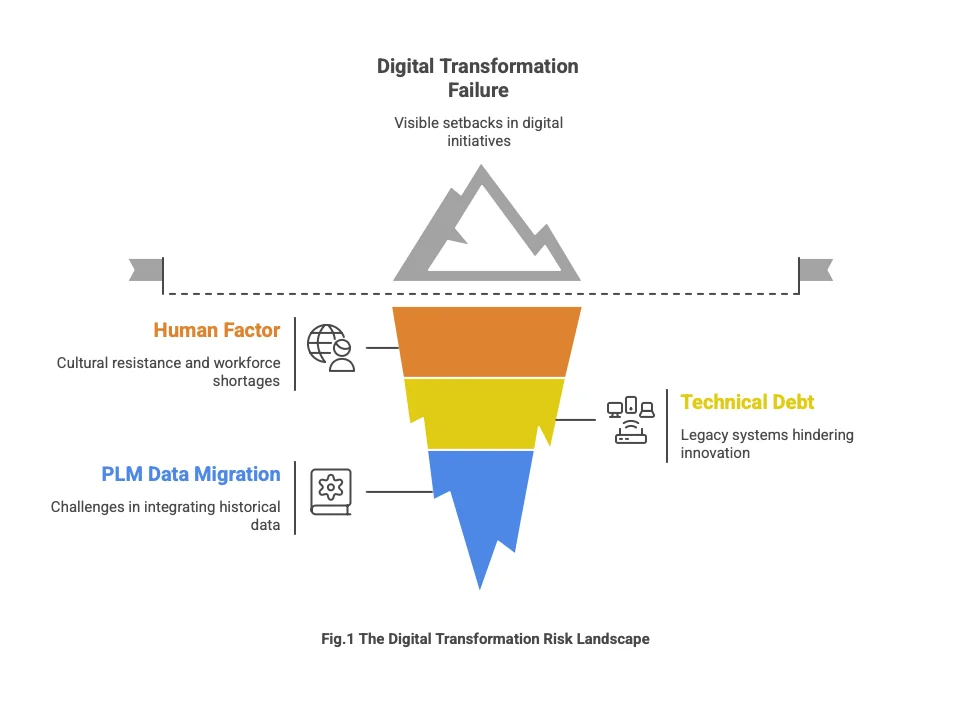
2.1 The Human Factor:
McKinsey and other researchers consistently find that organizational culture is a significant obstacle to digital transformation. Organizations that prioritize cultural change alongside technology see higher success rates than those only focusing on the tools.
Also, over 90% of manufacturers face workforce shortages worldwide. As seasoned technicians retire with decades of institutional knowledge, younger workers often lack the hands on experience required to manage complex machinery.
To de-risk this, global firms are using technology as a capability multiplier through upskilling, rather than a replacement for human expertise.Manual design workflows rely heavily on human memory and discipline. Engineers follow guidelines. They apply standards. They check compliance. This works at small scale.
2.2 Technical Debt and the Legacy Systems:
In heavy industries, enterprises often operate across several legacy systems. In the manufacturing sector, more than 70% of enterprises struggle to innovate because of constraints imposed by outdated technology. These systems were built before the era of cloud computing and advanced analytics, creating significant integration challenges.
The cost of maintaining legacy infrastructure is the technical debt that complicates modernization attempt. True digital transformation creates an integration layer, a decision system that links technologies into a unified operational model.
It is about building a system where information flows automatically across manufacturing workflows, enabling people to act on real-time data.
2.3 Establishing the Digital Thread via PLM:
For many global manufacturers, a robust PLM implementation serves as the backbone of the digital thread, which is the flow of data from initial design through engineering and into service. However, the risk during a PLM data migration is often underestimated.
Enterprises with thousands of SKUs and decades of historical data face significant challenges in mapping old system structures to modern schemas. A common failure point is over-customization. Tailoring the software to every existing manual process increases the maintenance burden and makes future upgrades riskier.
De-risking here involves a Minimum Viable Product approach, locking the scope to essential features first and using phased releases to add complexity later.
3. Strategic Framework for De-risking Implementation
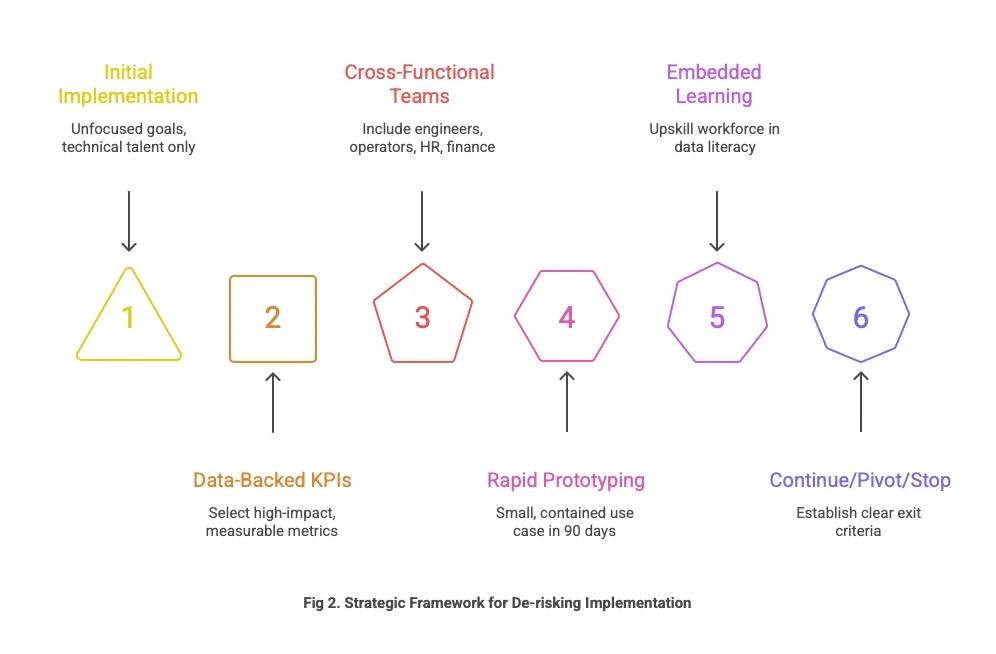
3.1 Data-Backed KPI Selection
Do not aim for broad, vague goals from the beginning.
- Select a high-impact Key Performance Indicator (KPI), such as Overall Equipment Effectiveness (OEE) or time-to-market, and audit the data sources and quality gaps.
- This focused approach prevents any chaos in business analysis, by narrowing the digital scope to measurable outcomes directly impacting the bottom line.
- It ensures that data collection efforts are decisive, targeting only the specific metrics that provide actionable insights for stakeholders.
3.2 Building Cross-Functional Teams
Technical talent alone is insufficient.
- De-risking requires cross-functional teams that include engineers, shop-floor operators, HR, and finance professionals to ensure the technology fits the actual workflow and avoids political bottlenecks.
- By involving end-users early in the design process, the teams can minimize cultural resistance and ensure the final digital solution addresses real-world pain points.
- A collaborative structure breaks down departmental silos, fostering a culture of shared ownership through the transformation process.
3.3 Rapid Prototyping
Build leadership confidence via early wins.
- Choose a small, contained use case, like AI-driven predictive maintenance or a specific PLM implementation, that can be delivered in 90 days. It allows the organization to uncover data debt.
- Short, iterative cycles allow for quick course corrections, preventing large resource investments into flawed or incompatible systems.
- These projects create a tangible proof-of-concept that can be used to secure further internal funding and executive/stakeholder buy-in.
3.4 Embedded Learning
Upskilling must happen in parallel with the technology rollout.
- Offering micro-credentials in data literacy or specific PLM functions ensures the workforce can scale with the system as it ships.
- Integrating training directly into the implementation phase reduces the skill gap that often stalls digital adoption after launch.
- A proactive education strategy empowers employees to see digital tools as career enhancers rather than threats to their job security.
3.5 The “Continue/Pivot/Stop” Protocol
Transparency is essential.
- At the end of a pilot, the enterprise must be willing to kill a project that is not delivering ROI and then redirect resources to what works.
- Establishing clear exit criteria beforehand removes any bias that can lead to sunk cost in long-term tech projects.
- Operational agility allows enterprises to remain lean and responsive, ensuring that innovation remains a value-driver rather than a drain on capital.
4. The Decision System: The Final Frontier
Digital transformation is about the decision system. A transformed factory fundamentally rethinks its processes. For instance, if an enterprises gains real-time data from a digital twin, its weekly production meeting shouldn’t stay weekly just because that’s the tradition, it should happen when the data dictates it.
Derisking digital transformation is not a task that can be delegated entirely to the IT department. It requires a strong commitment from leadership to unify business strategy and technology execution.
The blueprint for success in 2026 and beyond is clear; prioritize the human factor, address legacy debt through strategic PLM implementation, insist on technical interoperability, and follow a phased, data-backed roadmap.
